In the 1920s, Tulsa went from your ordinary, run-of-the-mill American city to the “Oil Capital of the World.” The promise of “black gold” drew oilmen—and their money—into the city. Many young businessmen from the more cosmopolitan east coast stayed and set up their companies’ headquarters, constructing extravagant buildings in the style of the time: Art Deco. Today, those gorgeous buildings dominate the downtown streets, making the business district a living museum where you can not only get an education in architecture and design, you can actually experience this aspect of Tulsa’s most opulent era first-hand where you eat, chill and sleep. Here’s a sampling of how to travel back in time to a glamorous golden age.
Jeffrey Tanenhaus made Tulsa his home after biking through on a cross-country journey. The architecture was just one of the things that captivated him, and he founded Tulsa Tours to show others the enchanting old-timey urban landscape. His Art Deco walking tours are a crash course in the movement’s evolution from Zig Zag to Streamline styles. On the Philcade he—or one of the other guides—points out Zig Zag details like the glazed terra cotta flora and fauna ornamentation and Egyptian-style columns. Down a short block, the sleek ARCO Building is a shining example of Streamline style. He also has exclusive access for tours to some of the not-public buildings, so relish the chance to marvel at tile mosaic or terrazzo floors, chandeliers and elevator doors emblazoned with copper and brass designs.
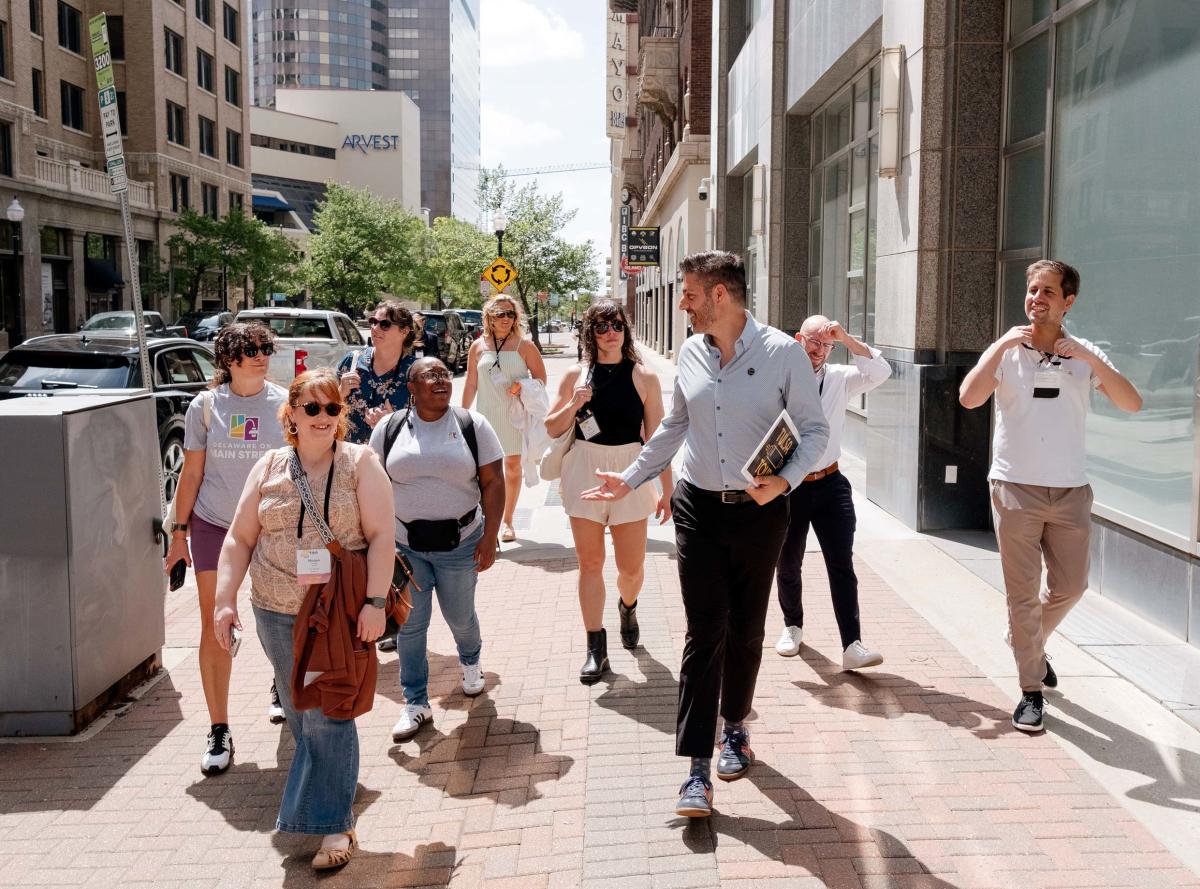 Tulsa Tours Art Deco Tour, Courtesy of Jeffrey Metcalf
Once upon a time, all banking was done in person. But in the 1950s, as owning a car became the norm, people started banking by drive-through. The First National Autobank, the world’s largest, was built in Tulsa in the late 50s. It featured six drive-through lanes. While its design leans towards the sleek Midcentury Modern of its day, the Art Deco details indicate that the architects knew their local history. Take note of the zigzag roof and the exterior details on the giant slabs of concrete. It’s all preserved at The Vault, a lively restaurant with high-ceiling dining room and a menu highlighting from-scratch modern American dishes, including vegan fare. Cap off the night back at the Tulsa Club, where the lobby bar is set just off of the main lobby. Take in the details of the century-old craftsmanship as you sip an equally well-crafted cocktail.
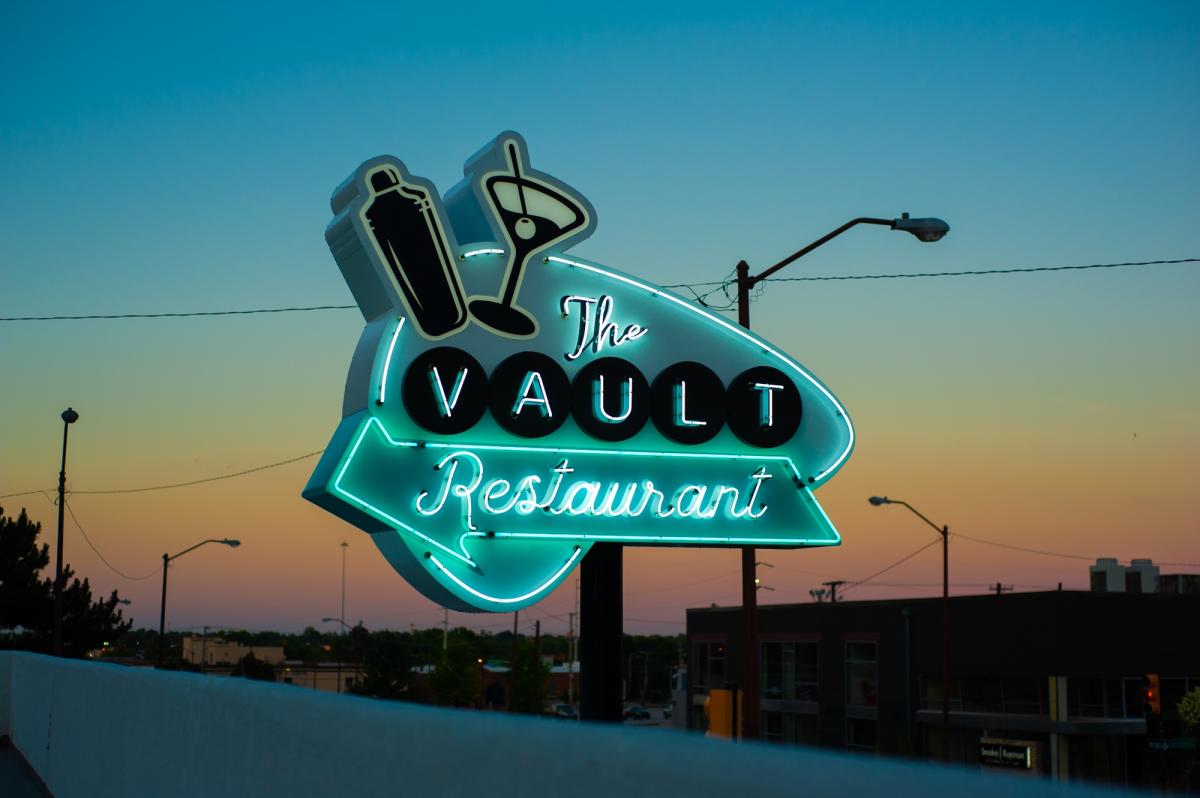 Courtesy of The Vault
Completed in 1929, the church stands as one of the greatest examples of ecclesiastical Art Deco in the U.S.
With its terra cotta statues above the entrance of the Circuit riders, early Methodists figures on horseback, its angled arch doorway, and dramatic 15-story tower crowned with a sculpture representing hands in prayer, the architecture bears some of the classic hallmarks of Art Deco. You don’t even need to go inside to be awe-struck. But you should. The astonishing craftsmanship and sly symbolism are everywhere in the domed chapel. And docents, all of whom are church members, are on call every Sunday at 12:15pm to lead visitors through the space and narrate the history. The 40-minute tour is free. You can take a self-guided tour (also free) with a booklet the church provides any day between 9am and 4pm. Or call the front desk two weeks ahead to arrange a small-group tour. Minimum of five people is preferred.
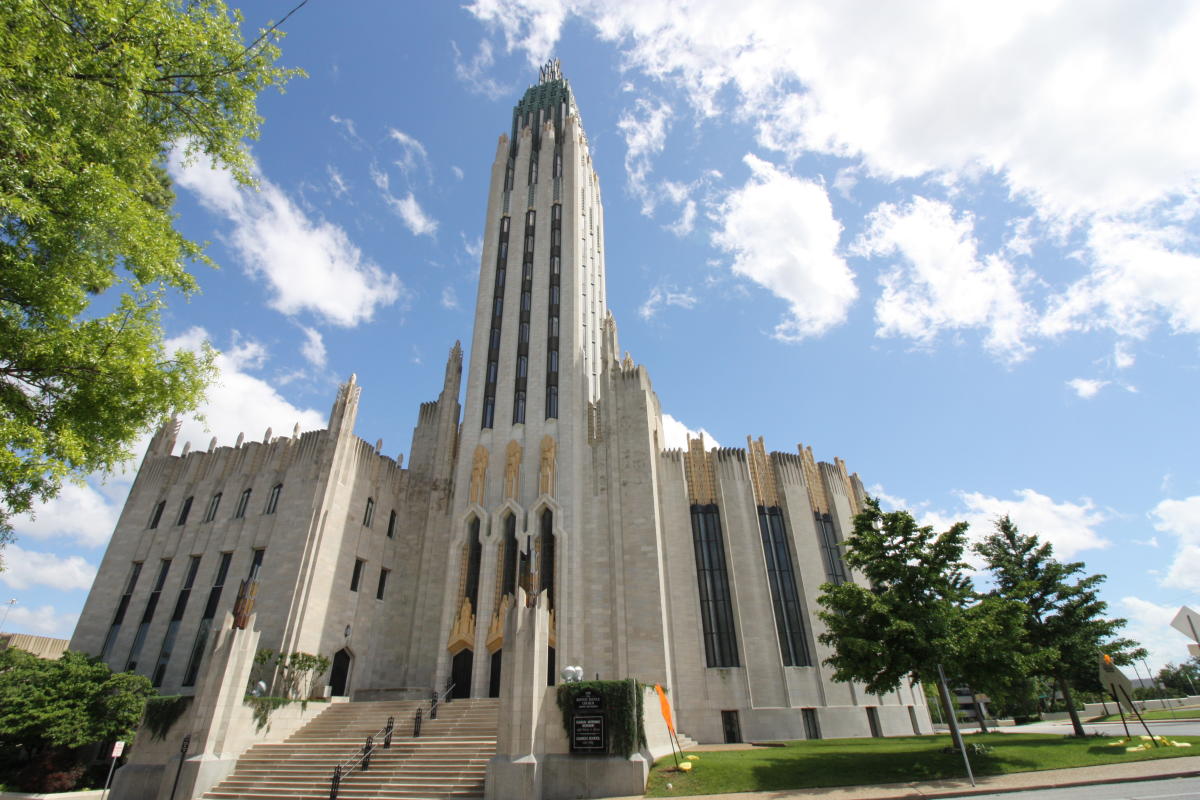 Courtesy Caitlin Dryke, Boston Avenue UMC
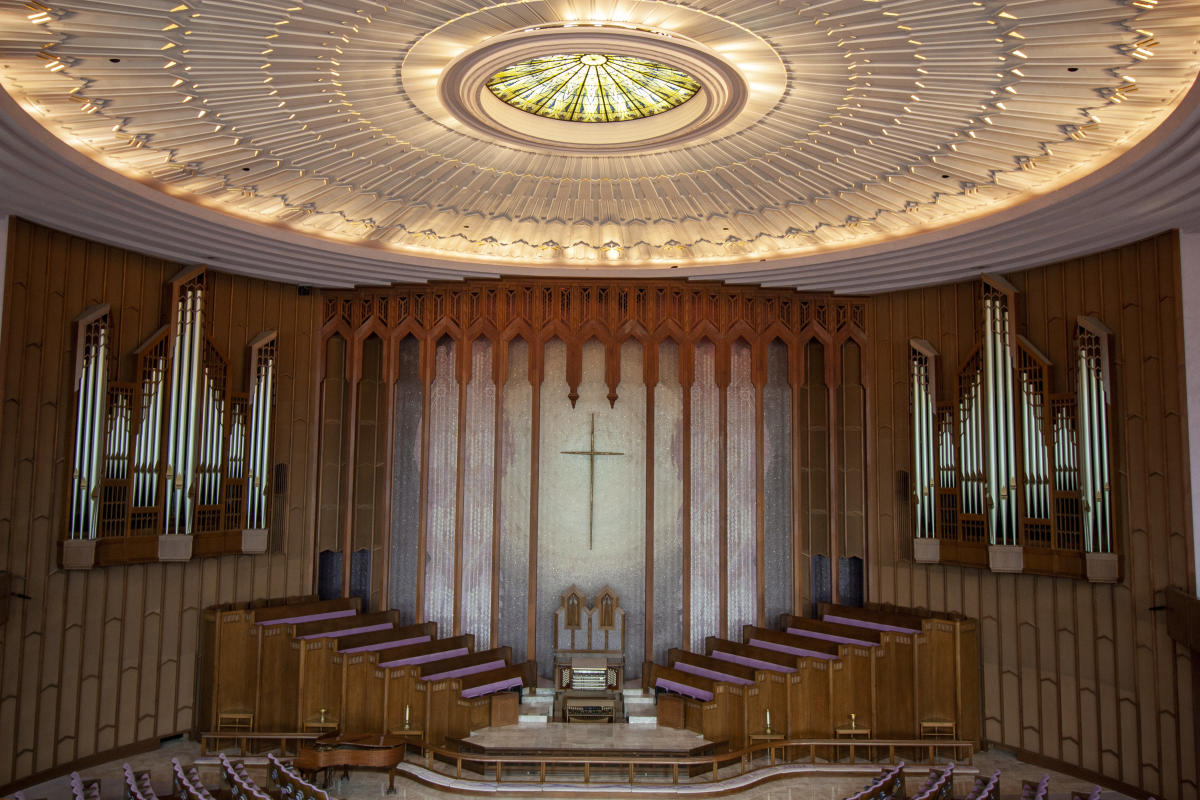 Courtesy Caitlin Dryke, Boston Avenue UMC
Want to explore more of Tulsa's Deco District? Click here!


 The Mayo Hotel, Courtesy of Valerie Wei-Haas
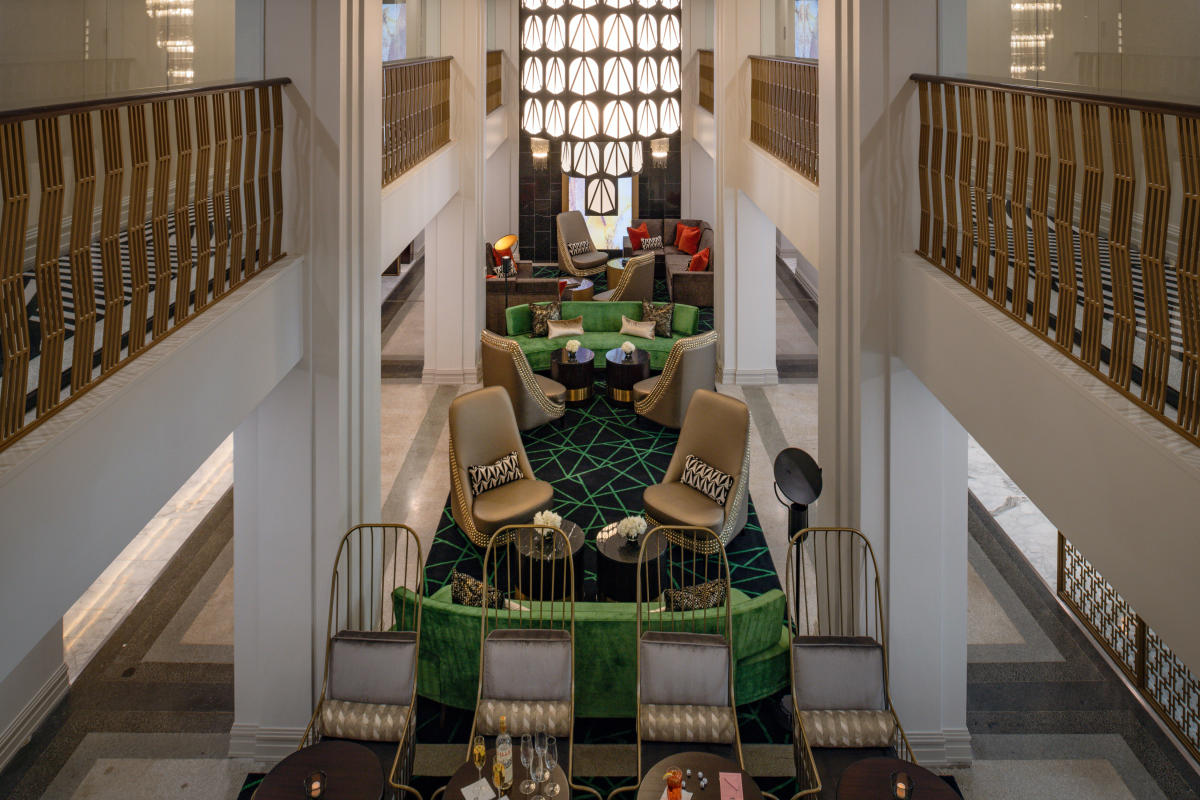 Courtesy of the Tulsa Club Hotel
